Issue 01 · December 2026 · Food 밥상
The Korean table is built for sharing
The food matters. So does the way it brings people together.
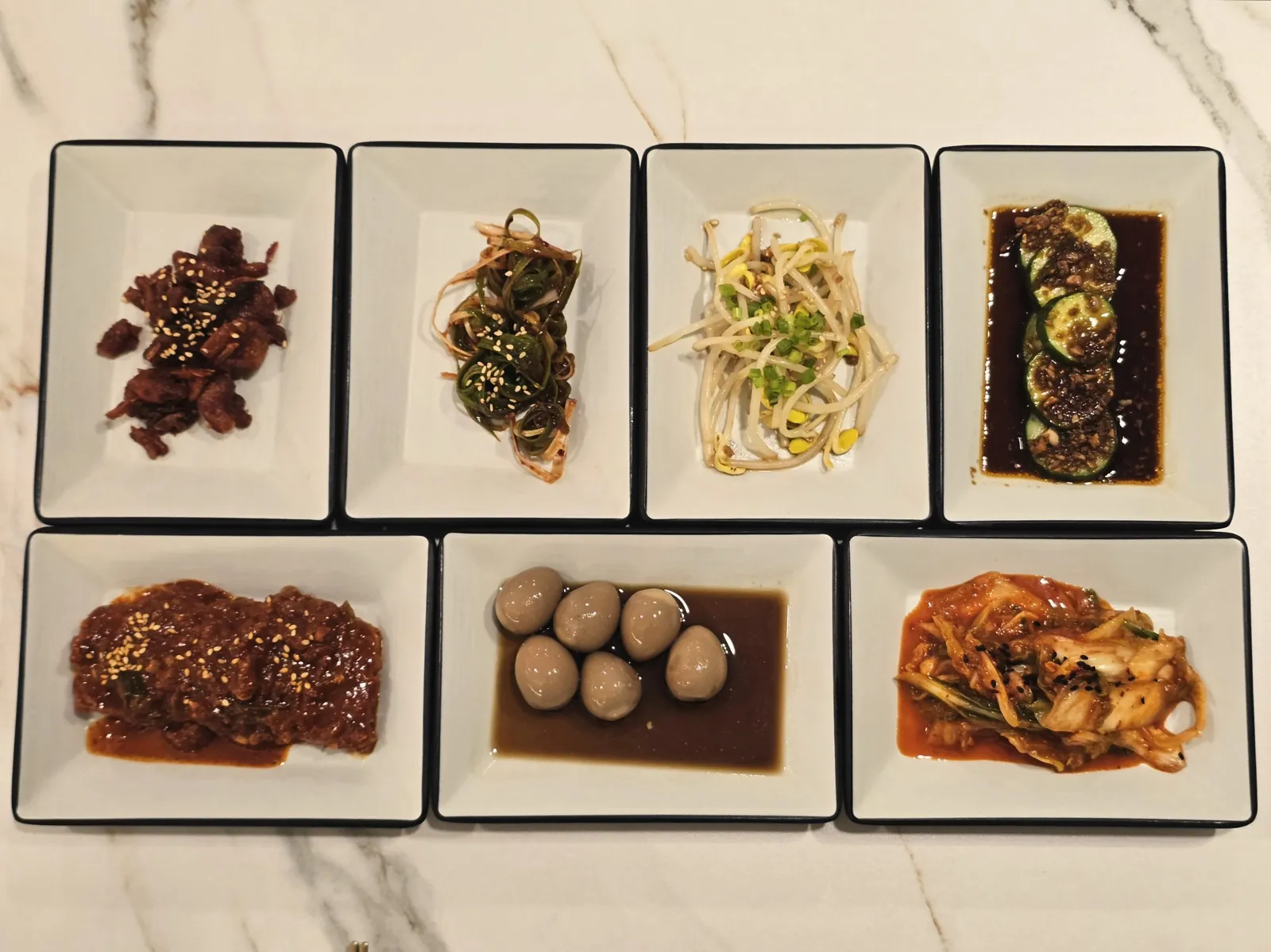
A Korean meal rarely arrives as one perfect plate for one person. It comes in layers: rice, soup, grilled meat, side dishes, sauces, vegetables, and the quiet expectation that everyone will reach into the middle.
That is the point. Korean food is designed to create conversation. You cook together, pass things around, recommend the next bite, and stay longer than planned. Even the smallest side dish has a role in the table’s rhythm.
For first-timers, the best approach is simple: order one grilled dish, one warm soup or stew, rice to share, and let the banchan 반찬 do the rest. There is no need to know every rule. The only rule that matters is to eat together.
Know your banchan
In Korea, small plates are usually refilled for free.
- Baechu kimchi 배추김치Fermented napa cabbage. The one that is always there.
- Kkakdugi 깍두기Cubed radish kimchi: crunchy, best with soup.
- Kongnamul-muchim 콩나물무침Bean sprouts with sesame oil and garlic.
- Sigeumchi-namul 시금치나물Blanched spinach, lightly seasoned.
- Mechurial jangjorim 메추리알 장조림Quail eggs braised in sweet soy.
- Myeolchi-bokkeum 멸치볶음Tiny anchovies stir-fried until crisp and sweet.
- Gyeran-mari 계란말이Rolled omelette, sliced. A favourite of children.
- Miyeok-julgi-bokkeum 미역줄기볶음Stir-fried seaweed stems, chewy and savoury.