Issue 01 · December 2026 · Grill culture 고기
Why the cut matters
Korean barbecue is not only about the fire. It is about care before the grill even starts.
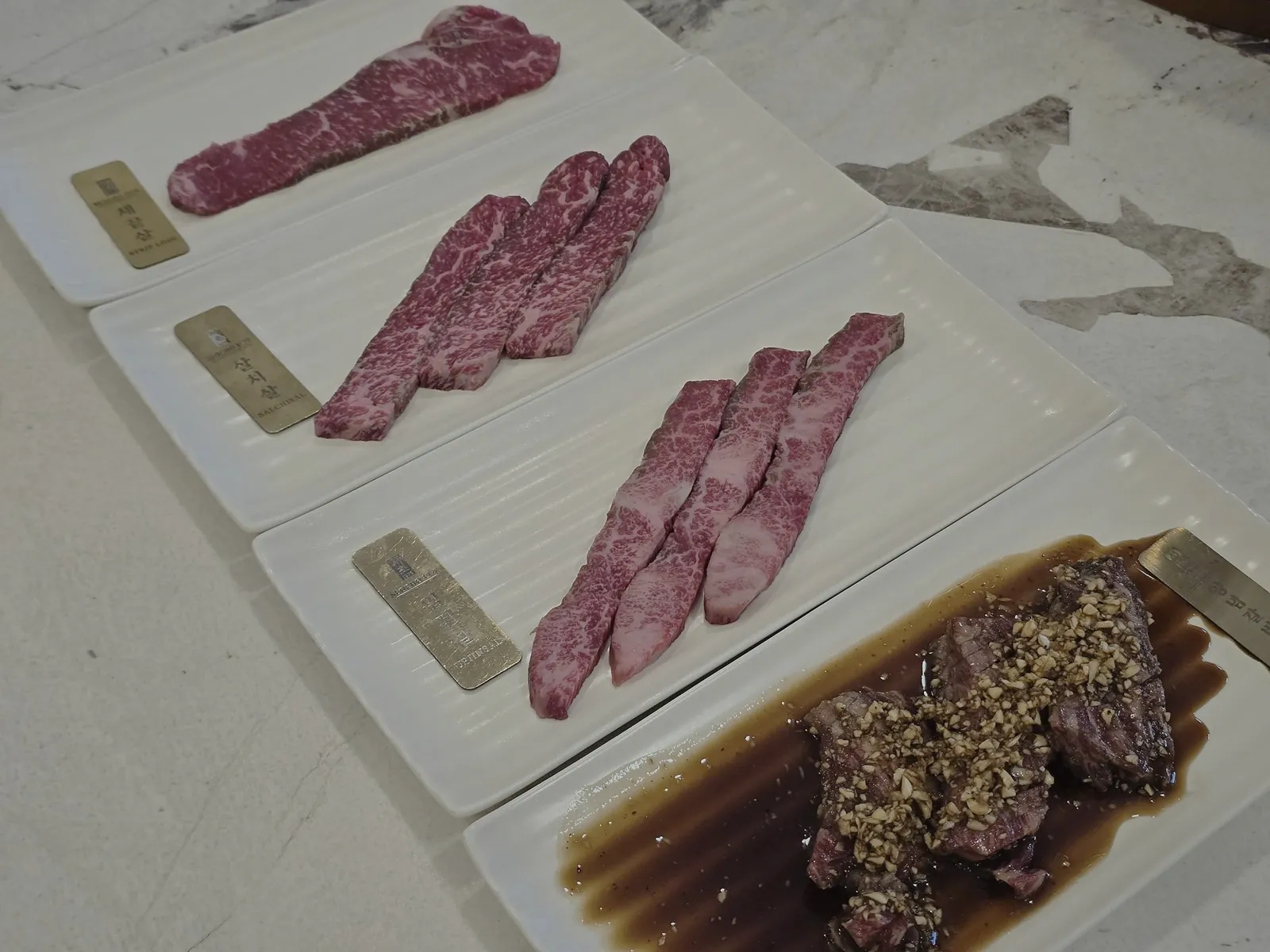
Great Korean grilling begins before the meat reaches the table. It begins with the cut, the balance of fat, the temperature, and the confidence to keep things simple.
In a premium Korean grill, the goal is not to cover every bite in sauce. It is to let the character of the meat come through, then build contrast with salt, vegetables, rice, and side dishes. The grill becomes part of the experience, but never the whole story.
If you are ordering for a group, start with one clean, well-marbled cut. Taste it with salt first. Add a wrap of lettuce or perilla leaf next. Then take your time. The best tables are never rushed.
Know your cuts
- Samgyeopsal 삼겹살Pork belly, “three layers.” The classic, grilled until the edges crisp.
- Chadolbagi 차돌박이Beef brisket sliced paper-thin. Cooks in seconds.
- Moksal 목살Pork neck: leaner, thicker, and juicy.
- Deungsim 등심Beef sirloin, often with fine marbling. Salt first.
- Hangjeongsal 항정살Pork jowl: small, rich, and springy.
- Galbi 갈비Ribs, beef or pork, often marinated. Ask before you flip.
The first three bites
- Meat + salt 소금Taste the cut on its own.
- Meat + rice 밥The everyday Korean bite.
- Ssam 쌈A lettuce or perilla leaf wrap with sauce.